


- 268 Wokingham Road
- |
- Reading
- |
- RG6 1JS

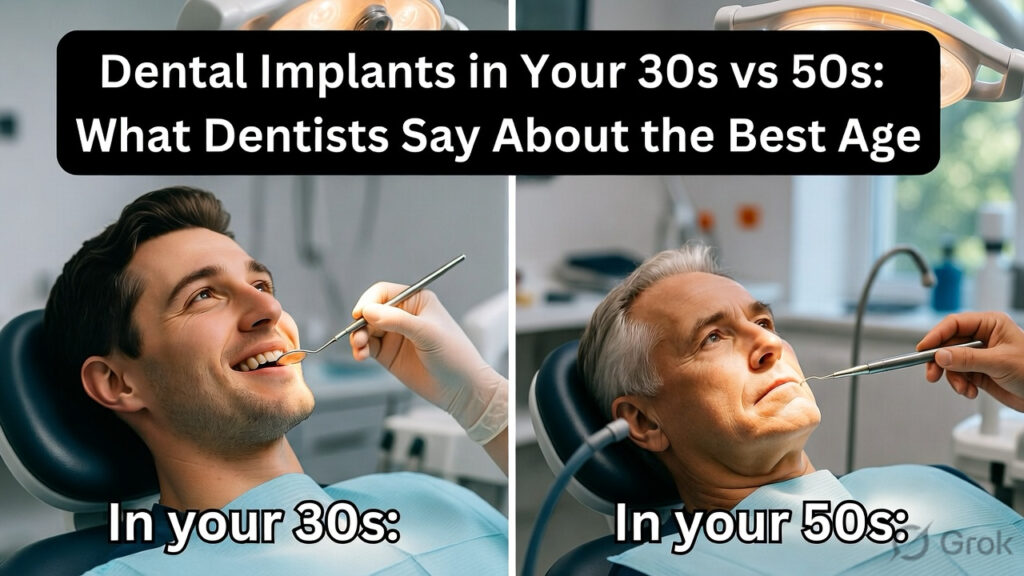
Losing a tooth can feel like a major setback. For many people, it affects far more than just their smile. It can impact confidence, eating habits, and even how they speak.
Dental implants have become one of the most trusted solutions for replacing missing teeth. But one question patients often ask is this:
Is there a “right” age to get dental implants?
Some people worry they might be too young in their 30s, while others wonder if their 50s might be too late.
In reality, dentists see successful implant treatments across many age groups. However, the experience and considerations can be quite different depending on when you choose to get them.
Let’s explore what dentists say about dental implants in your 30s versus your 50s, and how age can influence the process.
Over the past decade, dental implants have transformed the way dentists replace missing teeth. Unlike traditional bridges or dentures, implants are designed to function like natural tooth roots.
A small titanium post is placed into the jawbone, which then supports a crown that looks and feels like a real tooth.
The reason so many patients choose implants is simple. They offer several advantages:
Because of these benefits, implants are increasingly chosen by adults who want a permanent and natural-looking solution.
But age can still play an important role in treatment planning.
Many patients are surprised when dentists say that the 30s can actually be an excellent time to get dental implants.
At this stage of life, most people typically have strong bone density and good healing ability, which are important factors for implant success.
1. Stronger Bone Health
Jawbone density tends to be healthier in younger adults. This means the implant has a solid foundation for integration.
When bone density is strong, the implant fuses with the jaw more easily through a process called osseointegration.
2. Faster Healing
Patients in their 30s often experience quicker recovery times after implant surgery. The body’s ability to regenerate tissue is generally stronger compared with later decades.
3. Long-Term Protection Against Bone Loss
When a tooth is missing for many years, the surrounding bone can slowly shrink. Getting an implant earlier helps prevent this.
The implant acts like a natural tooth root, stimulating the jawbone and preserving facial structure.
4. Confidence and Career Impact
Many professionals in their 30s choose implants because appearance and confidence play a significant role in both personal and professional life.
A natural-looking smile can make a noticeable difference in everyday interactions.
Although implants can work very well at this age, dentists may still evaluate certain factors such as:
Maintaining excellent oral hygiene is essential because implants are designed to last decades when properly cared for.
Many people believe dental implants are mainly for younger patients, but that is not necessarily true. In fact, a large number of implant patients are in their 50s and beyond.
By this stage, people often seek implants after experiencing tooth loss due to decay, injury, or gum disease.
1. A Long-Term Solution Instead of Dentures
Many patients in their 50s want a more stable option than removable dentures.
Dental implants provide a fixed solution that feels more like natural teeth.
2. Improved Quality of Life
Being able to chew comfortably and smile confidently can significantly improve everyday life.
Patients often report better eating habits and greater self-confidence after treatment.
3. Mature Oral Care Habits
Patients in their 50s often have well-established dental hygiene routines, which can help maintain implant health long term.
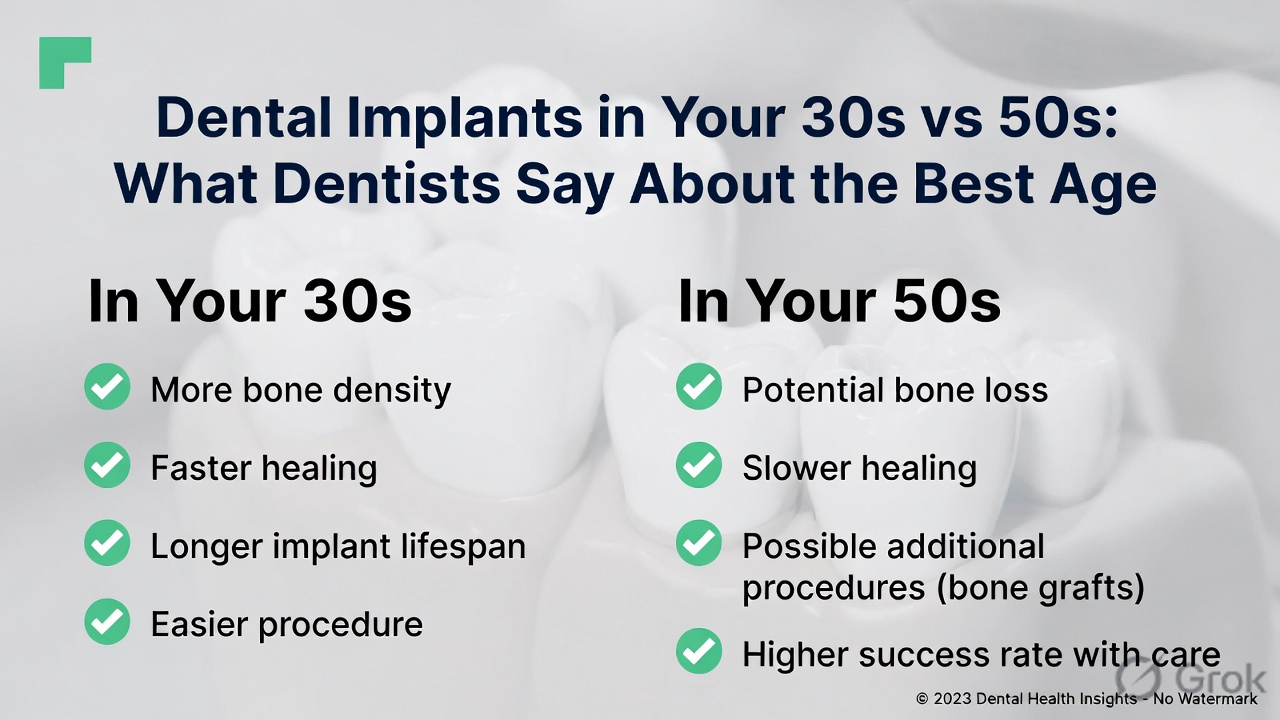
Although implants are very successful for patients in their 50s, dentists usually examine a few additional factors.
Bone Density
Bone density may decrease with age, particularly if a tooth has been missing for many years.
If the jawbone has shrunk, dentists may recommend a bone graft before placing the implant.
Medical Conditions
Certain conditions such as diabetes or medications affecting bone healing may influence treatment planning.
However, many patients with controlled health conditions can still receive implants successfully.
One of the most reassuring facts about dental implants is their high success rate.
Modern studies show that implants typically have a success rate of over 95 percent when placed by experienced professionals.
Age alone is rarely the determining factor.
Instead, dentists look at several important elements:
A healthy patient in their 50s may have just as much success as someone in their 30s.
Although implants can work well at different stages of life, dentists often tailor the treatment approach based on age-related factors.
Treatment usually focuses on long-term preservation of bone and surrounding teeth.
Dentists aim to ensure that the implant remains stable for many decades.
Treatment may involve restoring multiple missing teeth or replacing older dental work.
Additional procedures such as bone grafting or gum treatment may sometimes be recommended.
These steps help create the best possible environment for the implant.
While patients often focus on age, dentists say several other factors matter far more.
Healthy gums provide the foundation that supports the implant.
Untreated gum disease can compromise implant stability.
The jawbone must be strong enough to support the implant. If not, bone grafting can often rebuild the area.
Daily brushing, flossing, and regular dental visits are essential for keeping implants healthy.
With proper care, implants can last 20 years or longer.
Not at all. Once jaw growth is complete (usually after the late teens), implants can be a suitable option.
For adults in their 30s, implants may actually help preserve bone and prevent long-term complications.
Age alone does not prevent someone from receiving implants. Many patients in their 50s, 60s, and even 70s successfully receive implant treatment.
The key is overall oral and general health.
While no dental treatment can be guaranteed forever, implants can last decades with proper care.
Many patients keep their implants for 25 years or longer.
So, is it better to get dental implants in your 30s or your 50s?
The truth is that both age groups can benefit greatly from implant treatment.
Patients in their 30s may enjoy advantages like stronger bone density and faster healing, while patients in their 50s often seek implants to restore comfort, function, and confidence after tooth loss.
Rather than focusing solely on age, dentists look at the bigger picture: your oral health, bone structure, and long-term dental goals.
For many people, dental implants provide a life-changing solution that restores both smile and quality of life.
If you are thinking about dental implants, the best step is to consult an experienced dental professional who can assess your individual needs.
A personalised evaluation will help determine whether implants are the right option for you and how the treatment can be tailored for long-term success.
A healthy smile is not defined by age. It is defined by the care and attention you give to it.
Dental implants can be successful in both age groups. Patients in their 30s often benefit from stronger bone density and faster healing, while people in their 50s may choose implants to restore comfort and function after tooth loss. The most important factors are overall oral health, bone condition, and good hygiene habits.
Yes, dental implants are commonly placed in patients over 50. As long as a patient has healthy gums and sufficient bone structure, implants can be a reliable and long-lasting solution for missing teeth.
Dental implants can last 20–25 years or longer with proper care. Maintaining good oral hygiene and attending regular dental check-ups significantly increases their lifespan.
Dental implant procedures are usually performed under local anaesthesia, so patients typically feel little to no pain during the treatment. Mild discomfort after the procedure is common but usually resolves within a few days.
Yes, significant bone loss may affect implant placement. However, dentists can often perform bone grafting procedures to rebuild the jawbone before placing implants.
Back to Blog

“I have been going to this practice forever and highly recommend it. The reception...”

“I've been going to this practice for years and I can't recommend them enough!...”
“I’ve been a patient at the practice for a number of years and would...”
“Dr.Nish has been my dentist now for quite some time and is simply the...”
“I have been seeing Dr Nish for a number of years, recently went to...”
“I went to this practice for an emergency appointment. I haven't been to the...”
“I went to this practice for some fillings as I knew I had holes...”
“Even though I have moved from Earley, I still go back to this practice...”
“I have needed a maryland bridge at the front of my mouth replaced for...”
“AMAZING SERVICE! The staff were welcoming, friendly and professional. I was made to feel...”
“Dr. Raj did a smile makeover for me and I am over the moon...”
“Had a dental implant and it could not have gone better considering my fear...”
“I saw Dr. Raj for Invisalign treatment. He was totally professional and explained everything...”
“My experience at Earley Dental was exceptional. What a very professional and caring team!...”
“I would highly recommend this practice, all friendly and welcoming staff. I saw Dr...”
“Without doubt the best dental and hygienist care I’ve ever experienced. I’ve been a...”
“I have been using this practice for over 30 years, and always had a...”
“Excellent customer service and I have always been well taken care of by Dr...”
“I've been coming here for many years and have always been happy with them....”
“Very professional and knowledgeable, and take the time to clearly explain everything, would definitely...”
“This place is must go! This is like fancy restaurant, experience of your life!...”